Mulch Options for Every Project
The best hydroseeding mulch depends on your soil, slope, drainage, erosion risk, budget, and the type of coverage your project needs.
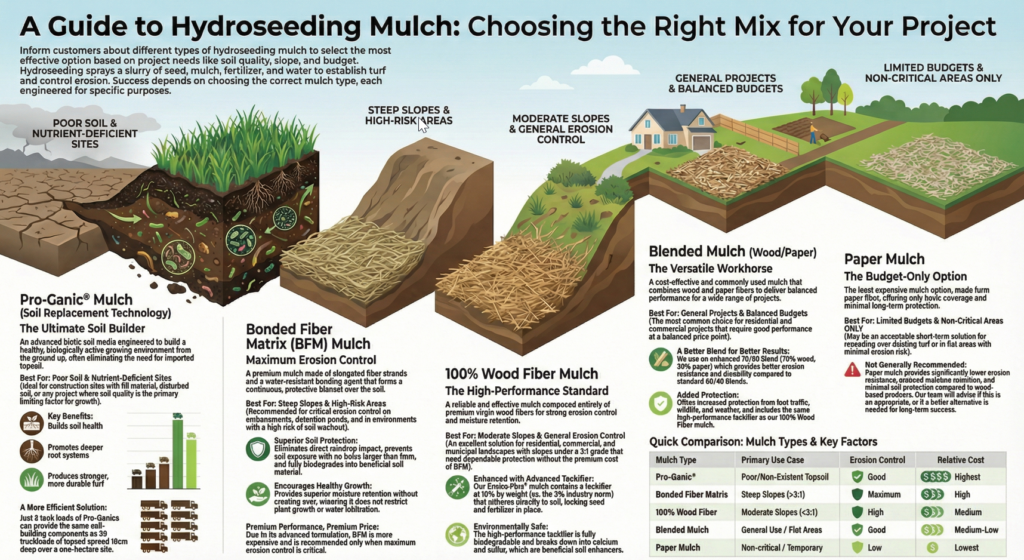
Pro-Ganic® Mulch
Pro-Ganic is engineered with organic matter, nutrients, and soil-building components for poor soil, fill material, and nutrient-deficient sites. It can reduce the need for imported topsoil while supporting deeper roots and stronger, more durable turf.
Paper Mulch
Paper mulch is the most economical option and works best on flat residential lawns during ideal growing seasons. It breaks down quickly but offers limited erosion protection.
Wood Mulch and 50/50 Blends
Wood fiber holds more moisture than paper and provides stronger erosion control. A 50/50 blend of wood and paper is a practical choice for many residential and light commercial projects in Houston.
Bonded Fiber Matrix (BFM)
BFM is engineered for severe slopes, detention ponds, and high-risk erosion areas. It cures into a continuous protective matrix that helps lock soil in place while vegetation establishes.
Choosing the Right System
A professional recommendation should account for soil quality, grade, drainage, expected runoff, and how quickly the site must be stabilized. More wood fiber and stronger tackifiers provide greater moisture retention and erosion resistance.
- Pro-Ganic® for poor soil and fill material
- BFM for steep slopes and critical erosion control
- 100% wood fiber for strong, cost-conscious stabilization
- Blended mulch for general residential and commercial projects
- Paper mulch for limited, non-critical applications