
What is Hydroseeding
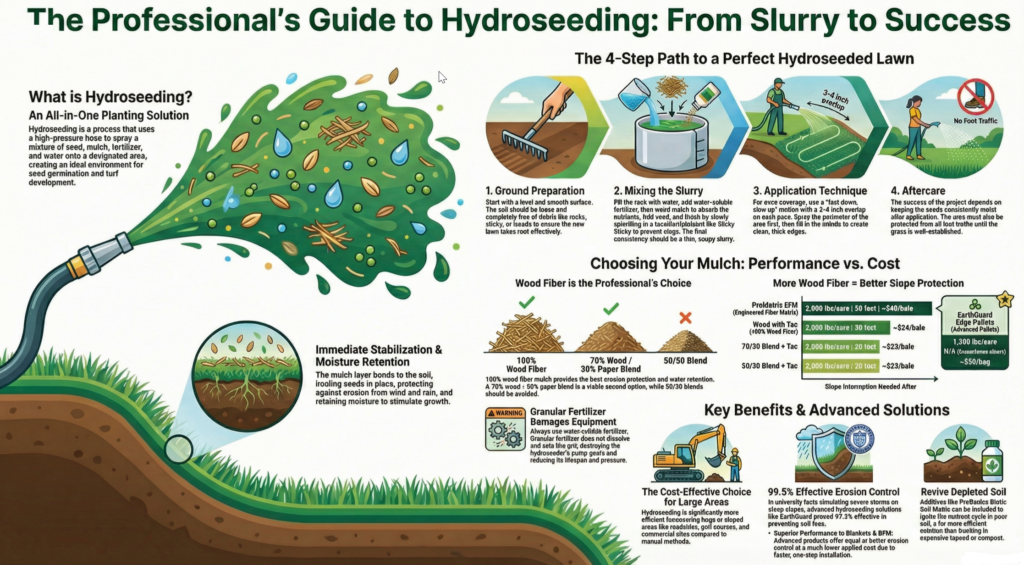
What is Hydroseeding?
How Hydroseeding Works: The 4-Step Process
1. Ground Preparation
The surface is leveled and cleared of rocks, debris, and clumps. Soil is loosened to promote root penetration so new grass establishes quickly and evenly.
2. Mixing the Slurry
Water, seed, fertilizer, mulch, tackifier, and dye are blended in the hydroseeder tank to create a thin, even slurry. Water-soluble fertilizer is always used, as granular fertilizer can damage hydroseeding equipment and reduce performance.
3. Application Technique
The mixture is applied using professional spray methods:
- Fast downward motion, slow upward return
- 2–4 inch overlap between passes
- Perimeter sprayed first, then filled in for clean edges
- Even, consistent coverage across the entire area
4. Aftercare
Successful results depend on keeping seed consistently moist during germination. The area should remain free from foot traffic and disturbance until the grass is fully established.
This step is especially important for construction sites, roadways, detention ponds, and sloped areas throughout the Houston region.
Choosing the Right Hydroseeding Mulch
Performance vs. Cost
Why Wood Fiber Is the Professional’s Choice
- 100% Wood Fiber – Best erosion control and moisture retention
- 70/30 Wood/Paper Blend – Viable second-best option
- 50/50 Blends – Should be avoided for critical applications
Professional Mulch Options
- Engineered Fiber Matrix (EFM) – ~2,000 lbs/acre, 50 ft coverage
- Wood Fiber with Tackifier – ~2,000 lbs/acre, 30 ft coverage
- 70/30 Blend + Tackifier – ~2,000 lbs/acre, 20 ft coverage
- EarthGuard Advanced Pellets – ~1,300 lbs/acre (limited slope protection)
Benefits of Hydroseeding
Key Benefits
- Faster Germination – Seeds establish more quickly
- Uniform Coverage – Eliminates bare spots and uneven growth
- Erosion Control – Mulch and tackifiers stabilize soil immediately
- Cost-Effective – Covers large areas more efficiently than sod
- Custom Seed Blends – Tailored to Houston’s climate and soil
- Revives Depleted Soil – Improves structure and nutrient availability
- Environmentally Responsible – Reduces runoff and supports sustainable landscaping
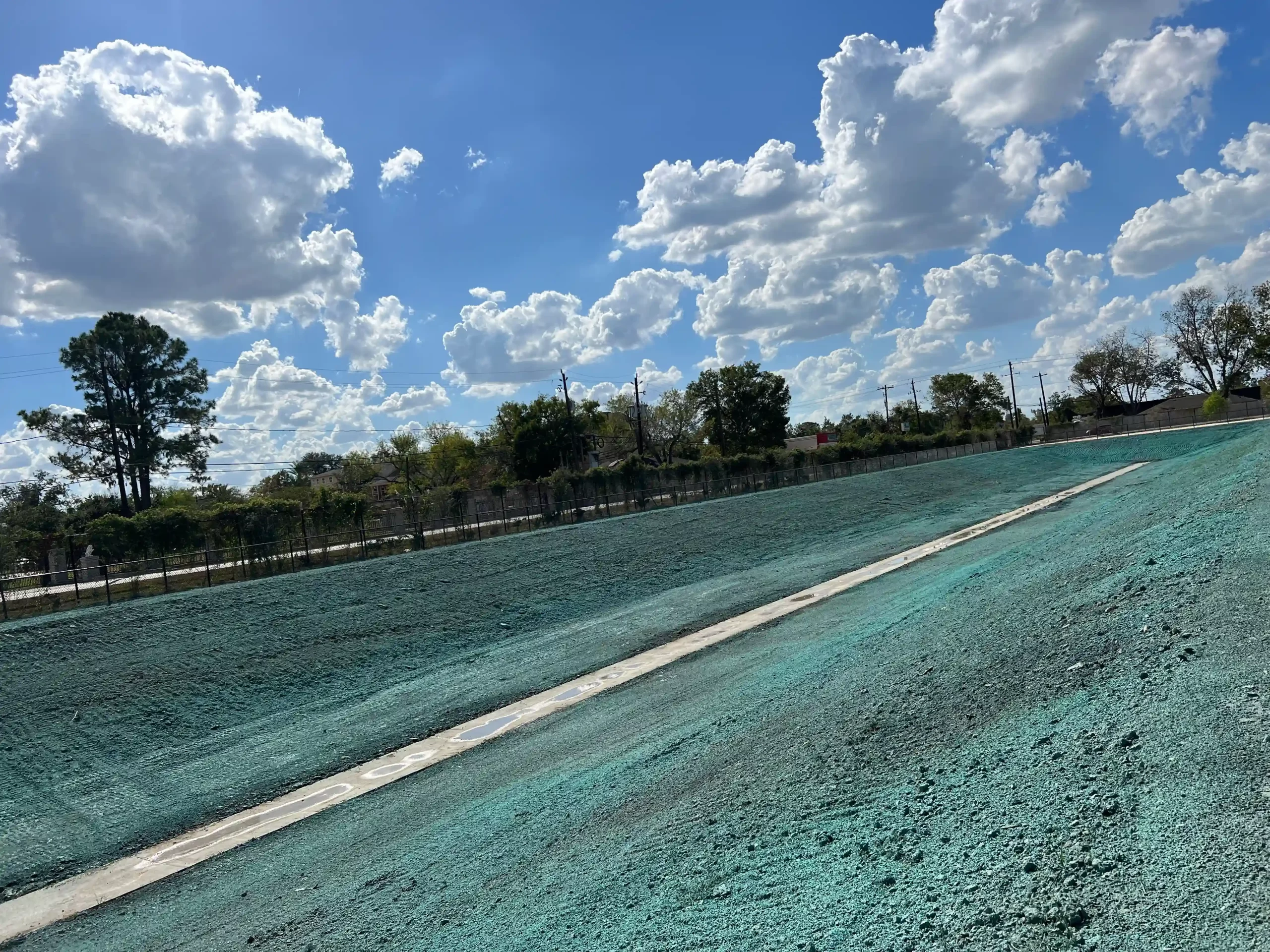
Proven Results
Common Applications For Hydroseeding
- Residential lawns and new home construction
- Churches and community properties
- Golf courses and athletic fields
- Industrial and commercial developments
- Public parks and municipal projects
- Retention ponds and drainage systems
- Roadsides, highways, medians, and subdivision entrances
- Slopes, embankments, and erosion-prone areas